What should I do if my partner seems emotionally attached to an AI companion?
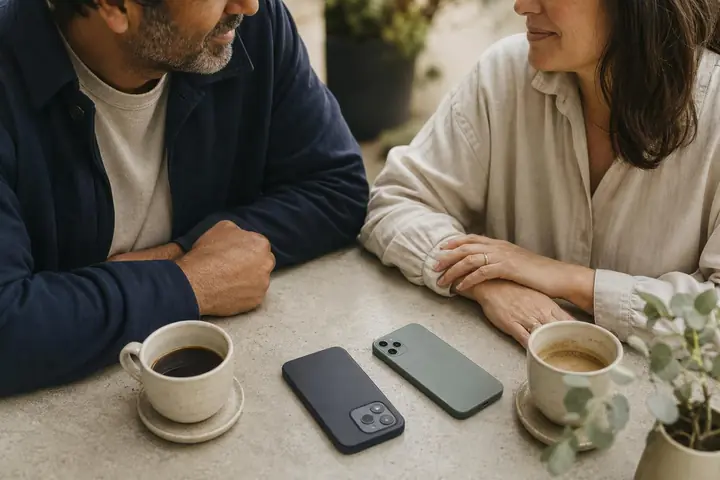
If your partner seems emotionally attached to an AI companion, start by saying what you've noticed and how it affects you. Ask what the connection means to them, without assuming their intentions. Talk about boundaries around secrecy, intimacy, and time spent with AI. You can respect their perspective without dismissing your own needs.
Why this can feel upsetting
Finding out that your partner feels emotionally connected to an AI companion can be confusing or painful. You might wonder whether their conversations have become romantic, why they turn to the AI, or what this connection means for your relationship.
People interact with AI companions for different reasons, including entertainment, emotional support, and companionship. Rather than guessing about your partner's intentions, focus on what you've noticed, how it affects you, and what you want to understand. Their reasons matter, but so do your feelings and boundaries.
What can help
- Start with curiosity. Ask what the AI companion means to your partner instead of assuming you already know.
- Be honest about your feelings. Explain whether you feel hurt, uncomfortable, confused, or concerned about the connection.
- Talk about trust. If secrecy, romantic conversations, or time spent with the AI has affected your relationship, discuss those concerns directly.
- Set clear boundaries. Talk about what each of you considers acceptable when it comes to emotional intimacy, privacy, and AI interactions. You can work toward shared agreements while still respecting your own limits.
A way to start the conversation
"I've noticed how close you seem to your AI companion, and I'm feeling uncomfortable about it. I don't want to assume what it means to you, but I'd like to understand. Can we talk about how this affects our relationship and what we're both comfortable with?"
When to seek support
If conversations repeatedly turn into arguments, trust has been affected by secrecy, or you cannot agree on boundaries, additional support may help. A qualified relationship professional may help you navigate these conversations and consider what comes next.
If you feel unsafe raising your concerns because of threats or intimidation, prioritize your safety and seek support separately.
Sources
- Conflict Resolution Skills, HelpGuide.org
- Seven Tips for Better Relationship Conversations, Greater Good Science Center, UC Berkeley
- Friends for sale: the rise and risks of AI companions, Ada Lovelace Institute